

Other ways to say sorry to bother you can help you sound more polite, confident, and professional in everyday conversations. Repeating the same phrase too often may come across as overly apologetic or even awkward. That’s why learning better alternatives matters. In this guide, you’ll find a variety of phrases suited for formal emails, workplace chats, and casual situations. These options help you communicate respectfully while keeping your message clear and natural, making your interactions smoother and more effective.
What Does “Sorry to Bother You” Mean?
“Sorry to bother you” is a polite phrase used to acknowledge that your message or request may interrupt or inconvenience someone. It conveys respect, thoughtfulness, and courtesy. While widely used, repeating it can feel overly formal or generic. Using alternative expressions allows you to tailor your tone, making your message feel considerate and professional—or friendly and casual—depending on the context.
When to Use “Sorry to Bother You”
You can use these alternatives in situations such as:
- Emails to colleagues, clients, or supervisors
- Texts or chats with friends or family
- Phone calls or video calls
- Asking for favors, help, or information
- Any moment when you want to politely acknowledge an interruption
Synonyms of “Sorry to Bother You” and How to Use Them
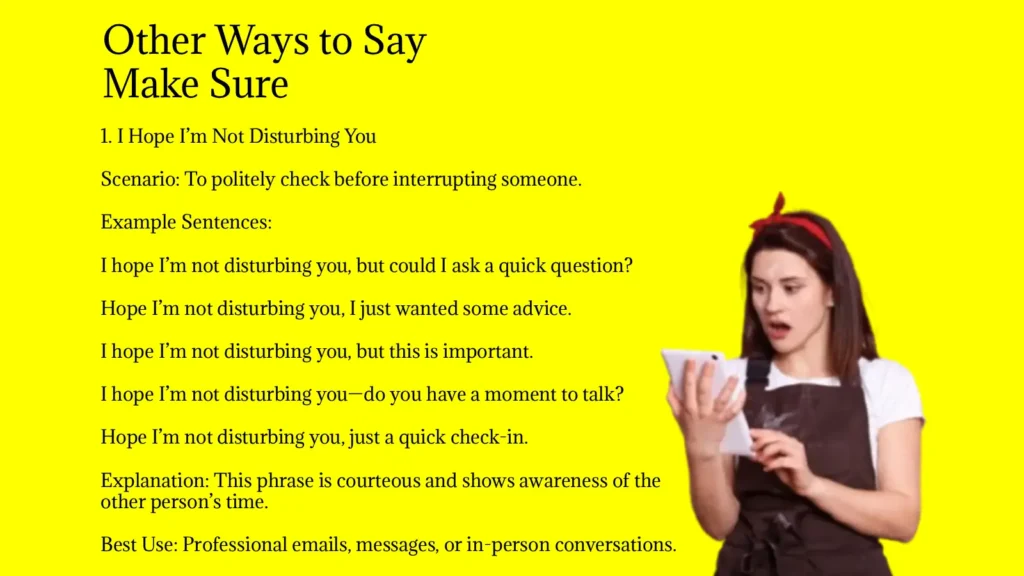
1. I Hope I’m Not Disturbing You
Scenario: To politely check before interrupting someone.
Example Sentences:
- I hope I’m not disturbing you, but could I ask a quick question?
- Hope I’m not disturbing you, I just wanted some advice.
- I hope I’m not disturbing you, but this is important.
- I hope I’m not disturbing you—do you have a moment to talk?
- Hope I’m not disturbing you, just a quick check-in.
Explanation: This phrase is courteous and shows awareness of the other person’s time.
Best Use: Professional emails, messages, or in-person conversations.
2. Sorry to Interrupt
Scenario: To politely acknowledge that you are stepping into someone’s space or conversation.
Example Sentences:
- Sorry to interrupt, but I need your input on this report.
- I hate to interrupt, but there’s something urgent.
- Sorry to interrupt, may I ask a quick question?
- Excuse me, sorry to interrupt your work.
- Sorry to interrupt, just wanted to clarify something.
Explanation: This is a direct and respectful phrase that works in almost any professional or casual setting.
Best Use: Meetings, calls, or approaching someone while they’re busy.
3. I Don’t Mean to Trouble You
Scenario: To show that you’re aware your request may be inconvenient.
Example Sentences:
- I don’t mean to trouble you, but could you review this document?
- I don’t mean to trouble you, I just need a quick favor.
- I hope I’m not troubling you with this request.
- I don’t mean to trouble you, but your advice would help.
- I hope this doesn’t trouble you too much.
Explanation: This phrase is gentle and formal, expressing politeness and humility.
Best Use: Professional emails, letters, or formal requests.
4. Hope I’m Not Being a Nuisance
Scenario: To acknowledge that your action might be slightly inconvenient.
Example Sentences:
- Hope I’m not being a nuisance, just checking if you received my email.
- Hope I’m not being a nuisance, can I ask a quick question?
- I hope I’m not being a nuisance by asking this.
- Hope I’m not being a nuisance—your help would be appreciated.
- I hope I’m not being a nuisance, but I need your guidance.
Explanation: This phrase has a friendly and slightly casual tone, suitable for colleagues or acquaintances.
Best Use: Emails, texts, or casual office conversations.
5. Apologies for the Disturbance
Scenario: To express formal regret for interrupting or inconveniencing someone.
Example Sentences:
- Apologies for the disturbance, but I need your approval on this.
- Please accept my apologies for the disturbance, I have a question.
- Apologies for the disturbance, can you spare a few minutes?
- Apologies for the disturbance, your guidance would be helpful.
- I send apologies for the disturbance, but this is time-sensitive.
Explanation: This phrase is professional and formal, perfect for business communication or important messages.
Best Use: Emails to clients, supervisors, or formal situations.
6. Excuse Me for Reaching Out
Scenario: To politely acknowledge your initiative to contact someone.
Example Sentences:
- Excuse me for reaching out, but I have a question.
- Excuse me for reaching out unexpectedly, can we chat for a moment?
- Excuse me for reaching out, your advice would be appreciated.
- Excuse me for reaching out, I hope it’s not a bad time.
- Excuse me for reaching out, just a quick clarification.
Explanation: This phrase shows respect and consideration, ideal when contacting someone you haven’t spoken to recently.
Best Use: Emails, LinkedIn messages, or first-time outreach.
7. I Hope This Isn’t an Inconvenience
Scenario: To politely frame your request as mindful of the other person’s time.
Example Sentences:
- I hope this isn’t an inconvenience, but could you review this?
- Hope this isn’t an inconvenience, just a quick question.
- I hope this isn’t an inconvenience, your help would mean a lot.
- Hope this isn’t an inconvenience, I’d appreciate your insight.
- I hope this isn’t an inconvenience—thanks for your time!
Explanation: This phrase expresses courtesy and consideration for the other person.
Best Use: Professional or semi-formal communication.
8. I Hate to Disturb You
Scenario: To convey polite regret for interrupting.
Example Sentences:
- I hate to disturb you, but I need your input.
- I hate to disturb you, can you advise on this matter?
- I hate to disturb you during your busy day.
- I hate to disturb you, just a quick clarification needed.
- I hate to disturb you, thanks for your time!
Explanation: This phrase is slightly informal but conveys empathy and politeness.
Best Use: Emails, texts, or casual workplace situations.
9. Sorry for the Interruption
Scenario: A straightforward, neutral way to acknowledge an interruption.
Example Sentences:
- Sorry for the interruption, may I ask a quick question?
- I’m sorry for the interruption, but I need your advice.
- Sorry for the interruption, just a small favor to ask.
- Sorry for the interruption, can we discuss this briefly?
- My apologies for the interruption, hope it’s a good time.
Explanation: Works in most situations, neutral and professional.
Best Use: Calls, meetings, or emails.
10. I Don’t Want to Take Up Too Much of Your Time
Scenario: To politely acknowledge that your request is brief.
Example Sentences:
- I don’t want to take up too much of your time, but I need guidance.
- Don’t want to take up too much of your time—just a quick question.
- I hope I’m not taking up too much of your time.
- I don’t want to take up too much of your time, could you advise me?
- Just a quick message—I don’t want to take up too much of your time.
Explanation: Shows consideration and respect for the other person’s schedule.
Best Use: Professional emails, texts, or meetings.
11. Apologies for the Interruption
Scenario: To combine formal courtesy with acknowledgment of interruption.
Example Sentences:
- Apologies for the interruption, may I have a moment?
- Please accept my apologies for the interruption.
- Apologies for the interruption, I hope it’s a good time.
- Apologies for the interruption, can we discuss this quickly?
- I send my apologies for the interruption and your time.
Explanation: Polite and formal, suitable for professional communication.
Best Use: Workplace emails or important messages.
12. I Hope This Isn’t a Bad Time
Scenario: To acknowledge the recipient may be busy.
Example Sentences:
- I hope this isn’t a bad time, can we chat?
- Hope this isn’t a bad time, just a quick question.
- I hope this isn’t a bad time, your advice is needed.
- Hope this isn’t a bad time, I’d appreciate your insight.
- I hope this isn’t a bad time, may I ask something quickly?
Explanation: Polite and considerate, shows awareness of the other person’s schedule.
Best Use: Emails, calls, or casual texts.
13. Apologies for Taking Up Your Time
Scenario: To express politeness when your request might require effort.
Example Sentences:
- Apologies for taking up your time, I just need guidance.
- I apologize for taking up your time, but this is urgent.
- Apologies for taking up your time, your advice is appreciated.
- I hope I’m not taking up too much of your time, apologies.
- Apologies for taking up your time, thank you for your help.
Explanation: Formal, thoughtful, and professional.
Best Use: Emails, formal requests, or letters.
14. I Hate to Trouble You
Scenario: To politely acknowledge your request may inconvenience someone.
Example Sentences:
- I hate to trouble you, but could you check this report?
- I hate to trouble you, your help would mean a lot.
- I hate to trouble you, just a quick clarification.
- Sorry, I hate to trouble you, but I need your guidance.
- I hate to trouble you, thanks for taking the time.
Explanation: Gentle, courteous, and slightly formal.
Best Use: Professional or polite casual communication.
15. Pardon the Interruption
Scenario: A very polite and classic phrase for formal situations.
Example Sentences:
- Pardon the interruption, may I ask a quick question?
- Pardon the interruption, but this is urgent.
- Pardon the interruption, your advice is needed.
- Pardon the interruption, I hope it’s a good time.
- Pardon the interruption, thanks for your patience.
Explanation: Formal and respectful, perfect for in-person or professional interactions.
Best Use: Business, formal emails, or meetings.
16. Excuse the Interruption
Scenario: To politely acknowledge that you are interrupting.
Example Sentences:
- Excuse the interruption, but I need a quick clarification.
- Excuse the interruption, I just wanted your opinion.
- Excuse the interruption, but this is urgent.
- Excuse the interruption, can we talk for a moment?
- Excuse the interruption, thanks for your time!
Explanation: Polite and professional, suitable for both written and spoken communication.
Best Use: Meetings, emails, or office conversations.
17. Sorry for Inconveniencing You
Scenario: To formally acknowledge any inconvenience caused.
Example Sentences:
- Sorry for inconveniencing you, I just need a brief update.
- Sorry for inconveniencing you, your advice is appreciated.
- I apologize for inconveniencing you, but this is important.
- Sorry for inconveniencing you, can we discuss this?
- Sorry for inconveniencing you, thanks for your help in advance.
Explanation: Formal and professional, emphasizes consideration for the recipient.
Best Use: Emails to clients, supervisors, or formal letters.
18. Hope This Isn’t an Interruption
Scenario: To politely check if it’s okay to reach out.
Example Sentences:
- Hope this isn’t an interruption, can I ask a quick question?
- Hope this isn’t an interruption, I just wanted your advice.
- Hope this isn’t an interruption, do you have a moment?
- Hope this isn’t an interruption, your input would be helpful.
- Hope this isn’t an interruption, thanks for taking the time.
Explanation: Casual and friendly, shows awareness of the other person’s schedule.
Best Use: Emails, texts, and informal chats.
19. I Don’t Mean to Disturb You
Scenario: To soften a request while acknowledging potential inconvenience.
Example Sentences:
- I don’t mean to disturb you, but can I ask a quick question?
- I don’t mean to disturb you, your advice would help a lot.
- I don’t mean to disturb you, just a brief moment of your time.
- I don’t mean to disturb you, can we discuss this?
- I don’t mean to disturb you, thanks for your patience.
Explanation: Gentle, polite, and suitable for both casual and professional contexts.
Best Use: Emails, WhatsApp messages, or in-person requests.
20. Apologies for Any Inconvenience
Scenario: To formally acknowledge any inconvenience caused.
Example Sentences:
- Apologies for any inconvenience, your guidance would be appreciated.
- Apologies for any inconvenience, I need your quick advice.
- Apologies for any inconvenience, but this requires your input.
- Apologies for any inconvenience, thanks for your help.
- Apologies for any inconvenience, I hope this is not a bad time.
Explanation: Very professional, shows care for the recipient’s time and effort.
Best Use: Formal emails, letters, or professional communication.
21. Sorry for Taking Up Your Time
Scenario: To acknowledge that your request might be brief but still requires effort.
Example Sentences:
- Sorry for taking up your time, just a quick question.
- Sorry for taking up your time, your insight would help.
- Sorry for taking up your time, can you check this document?
- Sorry for taking up your time, thanks for your guidance.
- Sorry for taking up your time, I appreciate your attention.
Explanation: Professional and courteous, ideal for office or formal contexts.
Best Use: Emails, messages, or polite phone calls.
22. I Appreciate Your Time
Scenario: To acknowledge someone’s effort in advance while politely making a request.
Example Sentences:
- I appreciate your time, can you help with this task?
- Thanks in advance, I really appreciate your time.
- I appreciate your time, just a brief question.
- I appreciate your time, your advice would mean a lot.
- Thanks, I appreciate your time and help!
Explanation: Polite and grateful, shifts focus from interruption to appreciation.
Best Use: Professional emails, LinkedIn messages, or formal texts.
23. I Hope This Isn’t a Burden
Scenario: To show awareness that your request might require effort.
Example Sentences:
- I hope this isn’t a burden, but could you help me?
- Hope this isn’t a burden, your guidance would help.
- I hope this isn’t a burden, I need your opinion.
- Hope this isn’t a burden, just a quick question.
- I hope this isn’t a burden, thank you for your support.
Explanation: Polite, caring, and considerate, ideal for colleagues or friends.
Best Use: Emails, messages, or small favors.
24. I Hate to Intrude
Scenario: To politely acknowledge that you may be stepping into someone’s space.
Example Sentences:
- I hate to intrude, but may I ask a quick question?
- I hate to intrude, can I get your advice on something?
- I hate to intrude, your guidance is appreciated.
- I hate to intrude, just a moment of your time.
- I hate to intrude, thank you for listening.
Explanation: Slightly informal, shows empathy and politeness.
Best Use: In-person conversations or casual emails.
25. Apologies for the Delay in Reaching Out
Scenario: To combine politeness with acknowledging that you are contacting someone later than expected.
Example Sentences:
- Apologies for the delay in reaching out, can you help with this?
- Sorry for the delay in reaching out, your advice is appreciated.
- Apologies for the delay in reaching out, I have a quick question.
- Sorry for the delay in reaching out, hope you’re well.
- Apologies for the delay in reaching out, thanks for your time.
Explanation: Formal and professional, suitable for clients or supervisors.
26. I Hope I’m Not Disturbing Your Day
Scenario: To acknowledge the other person’s busy schedule.
Example Sentences:
- I hope I’m not disturbing your day, can I ask a quick question?
- Hope I’m not disturbing your day, your guidance is needed.
- I hope I’m not disturbing your day, thanks for your help.
- Hope I’m not disturbing your day, just a quick favor.
- I hope I’m not disturbing your day, I really appreciate your time.
Explanation: Friendly and polite, works for both casual and professional contexts.
27. Forgive the Intrusion
Scenario: A formal, polite way to acknowledge your interruption.
Example Sentences:
- Forgive the intrusion, but may I ask a question?
- Forgive the intrusion, your advice would be helpful.
- Forgive the intrusion, can we discuss this briefly?
- Forgive the intrusion, hope I’m not disturbing you.
- Forgive the intrusion, thanks for your attention.
Explanation: Formal and respectful, suitable for professional or polite requests.
28. Sorry for Reaching Out Unexpectedly
Scenario: To politely acknowledge that your contact is unsolicited.
Example Sentences:
- Sorry for reaching out unexpectedly, can I ask for your input?
- Apologies for reaching out unexpectedly, your guidance is appreciated.
- Sorry for reaching out unexpectedly, hope it’s a good time.
- Sorry for reaching out unexpectedly, just a quick question.
- Apologies for reaching out unexpectedly, thank you for your time.
Explanation: Professional, polite, and thoughtful.
29. I Hope This Isn’t an Imposition
Scenario: To politely acknowledge that your request might be demanding.
Example Sentences:
- I hope this isn’t an imposition, but could you review this?
- Hope this isn’t an imposition, your input is valuable.
- I hope this isn’t an imposition, just a brief question.
- Hope this isn’t an imposition, thanks for your guidance.
- I hope this isn’t an imposition, appreciate your help.
Explanation: Formal and polite, suitable for professional contexts or sensitive requests.
30. Please Excuse Me for Disturbing You
Scenario: A formal, classic way to acknowledge an interruption.
Example Sentences:
- Please excuse me for disturbing you, may I ask a question?
- Please excuse me for disturbing you, your guidance is appreciated.
- Please excuse me for disturbing you, just a quick favor.
- Please excuse me for disturbing you, hope this isn’t a bad time.
- Please excuse me for disturbing you, thank you for your patience.
Explanation: Polite, formal, and respectful, perfect for professional or formal communication.
31. I Don’t Mean to Take Up Too Much of Your Time
Scenario: To politely acknowledge that your request may require effort.
Example Sentences:
- I don’t mean to take up too much of your time, but can you help me with this?
- I don’t mean to take up too much of your time, your advice would be invaluable.
- I don’t mean to take up too much of your time, just a quick clarification.
- I don’t mean to take up too much of your time, thanks in advance!
- I don’t mean to take up too much of your time, your input means a lot.
Explanation: Polite and considerate, balancing request with awareness of the other person’s schedule.
Best Use: Emails, messages, and short in-person requests.
32. Pardon Me for Interrupting
Scenario: Classic and professional way to acknowledge an interruption.
Example Sentences:
- Pardon me for interrupting, may I ask a quick question?
- Pardon me for interrupting, your insight would be helpful.
- Pardon me for interrupting, just a moment of your time please.
- Pardon me for interrupting, thanks for your patience.
- Pardon me for interrupting, I need your quick advice.
Explanation: Formal, polite, and professional—works in both email and spoken communication.
Best Use: Business meetings, client conversations, and formal emails.
33. Apologies for the Disturbance
Scenario: To formally acknowledge that your message or request may interrupt.
Example Sentences:
- Apologies for the disturbance, but I need your opinion.
- Apologies for the disturbance, can we discuss this briefly?
- Apologies for the disturbance, your advice would help.
- Apologies for the disturbance, thanks for your time.
- Apologies for the disturbance, I hope this isn’t inconvenient.
Explanation: Formal and professional, emphasizes respect for the recipient’s time.
Best Use: Business emails, professional letters, or polite calls.
34. I Hope I’m Not Overstepping
Scenario: To politely acknowledge that you might be intruding or imposing.
Example Sentences:
- I hope I’m not overstepping, but can I ask for guidance?
- I hope I’m not overstepping, your feedback is appreciated.
- I hope I’m not overstepping, just a quick question.
- I hope I’m not overstepping, thanks for your attention.
- I hope I’m not overstepping, your advice would mean a lot.
Explanation: Polite and respectful, shows awareness of boundaries.
Best Use: Emails, texts, or in-person requests with colleagues or acquaintances.
35. I Hate to Disturb Your Schedule
Scenario: To acknowledge the other person’s busy day politely.
Example Sentences:
- I hate to disturb your schedule, but can we discuss this?
- I hate to disturb your schedule, your guidance would help.
- I hate to disturb your schedule, just a moment of your time.
- I hate to disturb your schedule, thanks for helping me out.
- I hate to disturb your schedule, I appreciate your attention.
Explanation: Polite and considerate, balances urgency with courtesy.
Best Use: Professional emails, messages, or in-person requests.
36. Forgive Me for Popping Up Out of the Blue
Scenario: Friendly way to acknowledge an unexpected message or visit.
Example Sentences:
- Forgive me for popping up out of the blue, I need your advice.
- Forgive me for popping up out of the blue, just a quick question.
- Forgive me for popping up out of the blue, your input is needed.
- Forgive me for popping up out of the blue, thanks for your help.
- Forgive me for popping up out of the blue, I appreciate your time.
Explanation: Casual, polite, and suitable for friends, colleagues, or familiar contacts.
Best Use: Informal messages, chat apps, or casual emails.
37. Sorry for Dropping This on You Unexpectedly
Scenario: Polite acknowledgment of sudden or unplanned contact.
Example Sentences:
- Sorry for dropping this on you unexpectedly, can you help?
- Sorry for dropping this on you unexpectedly, your advice would mean a lot.
- Sorry for dropping this on you unexpectedly, just a quick question.
- Sorry for dropping this on you unexpectedly, thank you for your patience.
- Sorry for dropping this on you unexpectedly, I hope it’s not inconvenient.
Explanation: Polite, conversational, and acknowledges the sudden nature of your request.
Best Use: Casual emails, WhatsApp messages, or informal texts.
Conclusion
Saying “Sorry to Bother You” is a polite way to acknowledge that you may be interrupting or imposing, but using the right alternative can make your message more thoughtful, professional, or friendly. From casual phrases like “Forgive Me for Popping Up Out of the Blue” to formal options like “Apologies for the Disturbance”, each expression helps you convey respect, consideration, and warmth.
Choosing the right wording depends on your relationship with the recipient and the context—whether it’s a quick text, a professional email, or an in-person request. By exploring these 37 alternatives, you can communicate your message clearly while maintaining politeness and leaving a positive impression. Using these phrases thoughtfully ensures your words feel genuine, considerate, and engaging, making every interaction smoother and more pleasant.

