

Looking for other ways to ask your boss for more hours at work without sounding pushy or unprofessional? You’re not alone.
Requesting extra hours can feel uncomfortable, especially when you want to maintain a positive relationship with your manager.
Using the wrong wording may come across as demanding or uncertain.
The right approach helps you sound confident, respectful, and motivated.
It also shows your willingness to contribute more while staying flexible with your schedule.
In this article, you’ll discover polite and professional ways to ask your boss for more hours at work with real examples.
What Does “Ask for More Hours at Work” Mean?
Asking for more hours at work means requesting additional shifts, extended working time, or increased responsibilities from your employer. It shows that you’re motivated, available, and willing to contribute more to the team.
When to Ask for More Hours
The best time to ask is when:
- Work is busy or understaffed
- You’ve demonstrated reliability and good performance
- Scheduling discussions are happening
- You’re taking on extra responsibilities
Is It Professional/Polite to Ask for More Hours?
Yes, it’s both professional and appropriate when done respectfully. Framing your request with flexibility, appreciation, and a willingness to help makes a positive impression on your employer.
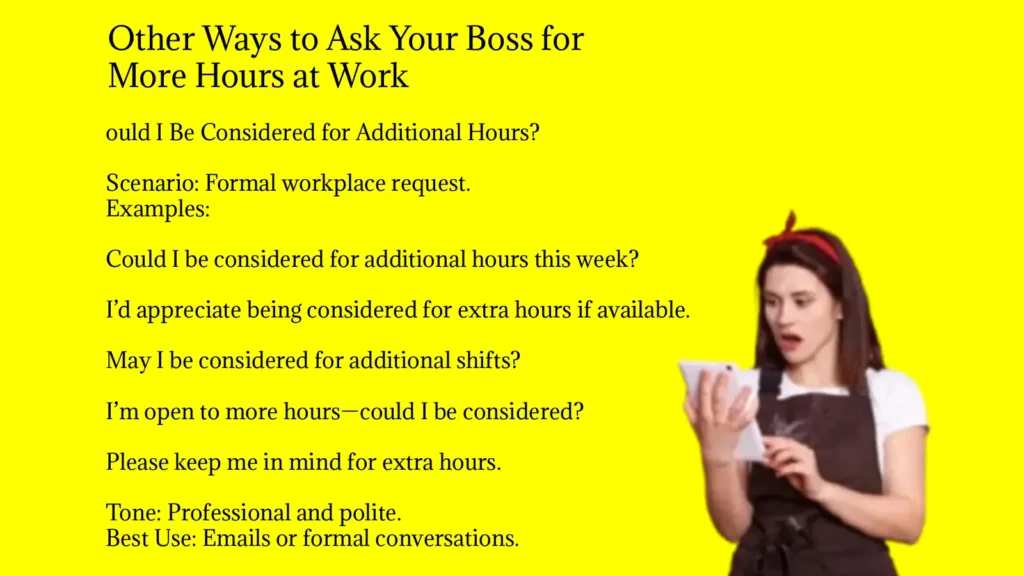
1. Could I Be Considered for Additional Hours?
Scenario: Formal workplace request.
Examples:
- Could I be considered for additional hours this week?
- I’d appreciate being considered for extra hours if available.
- May I be considered for additional shifts?
- I’m open to more hours—could I be considered?
- Please keep me in mind for extra hours.
Tone: Professional and polite.
Best Use: Emails or formal conversations.
2. I’m Available for More Shifts if Needed
Scenario: Letting your boss know your availability.
Examples:
- I’m available for more shifts if needed this week.
- Please let me know if you need help covering shifts.
- I can take on extra shifts if required.
- I’m happy to help with additional hours.
- Feel free to schedule me for more shifts.
Tone: Helpful and proactive.
Best Use: Casual workplace conversations.
3. I’d Love to Take on More Hours
Scenario: Expressing enthusiasm.
Examples:
- I’d love to take on more hours if possible.
- I’m interested in working additional hours.
- I’d really appreciate more shifts.
- I’d be glad to work extra hours.
- I’m eager to contribute more time.
Tone: Positive and enthusiastic.
Best Use: Friendly, open discussions.
4. Are There Any Extra Shifts Available?
Scenario: Direct but polite inquiry.
Examples:
- Are there any extra shifts available this week?
- Do you have any additional hours I could take?
- Are there open shifts I can cover?
- I was wondering if extra shifts are available.
- Could I pick up any extra shifts?
Tone: Direct and respectful.
Best Use: Quick, casual check-ins.
5. I Can Help Cover Any Open Shifts
Scenario: Offering support to the team.
Examples:
- I can help cover any open shifts if needed.
- Let me know if someone calls in—I can step in.
- I’m happy to fill in for others.
- I can assist with last-minute scheduling gaps.
- I’m available to support the team with extra hours.
Tone: Cooperative and supportive.
Best Use: Team-oriented environments.
6. I’m Looking to Increase My Hours
Scenario: Clear and professional statement.
Examples:
- I’m looking to increase my hours moving forward.
- I’d like to take on more hours if possible.
- I’m hoping to expand my schedule.
- I’m interested in increasing my workload.
- I’d appreciate more working hours.
Tone: Straightforward and professional.
Best Use: Performance reviews or scheduling talks.
7. Please Let Me Know if More Hours Become Available
Scenario: Passive but polite request.
Examples:
- Please let me know if more hours become available.
- I’d appreciate being notified about extra shifts.
- Keep me in mind for additional hours.
- I’m available if anything opens up.
- I’d be glad to step in if needed.
Tone: Polite and patient.
Best Use: When opportunities are limited.
8. I’d Be Happy to Work Extra Hours This Week
Scenario: Short-term request.
Examples:
- I’d be happy to work extra hours this week.
- I’m available for additional shifts this week.
- Let me know if you need extra help this week.
- I can extend my hours if needed.
- I’m open to working more this week.
Tone: Flexible and helpful.
Best Use: Busy periods.
9. Can I Pick Up Additional Shifts?
Scenario: Direct question.
Examples:
- Can I pick up additional shifts this week?
- Is it possible for me to take on extra shifts?
- May I pick up more shifts?
- Can I add more hours to my schedule?
- Could I take on extra shifts?
Tone: Direct and polite.
Best Use: Scheduling conversations.
10. I Have Availability for More Hours
Scenario: Informing your boss.
Examples:
- I have availability for more hours this week.
- My schedule is open for additional shifts.
- I can work more hours if needed.
- I’m available beyond my current schedule.
- I can increase my availability.
Tone: Informative and neutral.
Best Use: Letting management plan schedules.
11. I’m Interested in Taking on More Responsibility and Hours
Scenario: Growth-focused request.
Examples:
- I’m interested in taking on more responsibility and hours.
- I’d like to grow by working more hours.
- I’m open to additional duties and hours.
- I’d appreciate more opportunities to contribute.
- I’m ready for more responsibility.
Tone: Ambitious and professional.
Best Use: Career development discussions.
12. Could I Extend My Shifts?
Scenario: Requesting longer workdays.
Examples:
- Could I extend my shifts on certain days?
- Is it possible to lengthen my current shifts?
- Can I stay longer during my shifts?
- I’m open to extending my working hours.
- May I increase my shift duration?
Tone: Practical and direct.
Best Use: When full shifts aren’t available.
13. I’m Happy to Help During Busy Hours
Scenario: Offering targeted support.
Examples:
- I’m happy to help during busy hours.
- I can come in during peak times.
- I’d be glad to assist when it’s busiest.
- Let me know when you need extra support.
- I’m available for high-demand hours.
Tone: Supportive and strategic.
Best Use: Retail, hospitality, or service jobs.
14. Can You Add Me to Any Available Shifts?
Scenario: Casual scheduling request.
Examples:
- Can you add me to any available shifts?
- Please include me in open shifts.
- I’d like to be scheduled for more hours.
- Can I be added to extra shifts?
- I’d appreciate being scheduled more often.
Tone: Casual but respectful.
Best Use: Informal workplaces.
15. I’m Open to Overtime if Available
Scenario: Mentioning overtime opportunities.
Examples:
- I’m open to overtime if available.
- I’d be glad to work overtime hours.
- Let me know if overtime is an option.
- I’m available beyond regular hours.
- I can work overtime if needed.
Tone: Professional and committed.
Best Use: Corporate or structured workplaces.
16. I’d Like to Be Scheduled More Frequently
Scenario: Long-term schedule request.
Examples:
- I’d like to be scheduled more frequently.
- Could I get more regular shifts?
- I’m interested in a fuller schedule.
- I’d appreciate more consistent hours.
- Can my schedule be expanded?
Tone: Professional and clear.
Best Use: Ongoing scheduling changes.
17. I’m Available to Fill in When Needed
Scenario: Backup support offer.
Examples:
- I’m available to fill in when needed.
- I can step in for last-minute shifts.
- Feel free to call me if someone is absent.
- I’m happy to cover emergency shifts.
- I can help with unexpected gaps.
Tone: Reliable and helpful.
Best Use: Building trust with management.
18. Could I Take on More Weekly Hours?
Scenario: Structured increase request.
Examples:
- Could I take on more weekly hours?
- Is it possible to increase my weekly schedule?
- I’d like to add more hours each week.
- Can I increase my weekly workload?
- May I request more weekly hours?
Tone: Formal and professional.
Best Use: Contract or part-time roles.
19. I’d Appreciate More Opportunities to Work
Scenario: Polite and indirect request.
Examples:
- I’d appreciate more opportunities to work.
- I’d be grateful for additional hours.
- I’m open to more work opportunities.
- I’d welcome more shifts.
- I’d value extra working time.
Tone: Respectful and appreciative.
Best Use: When being extra polite matters.
20. Is There Room for Me to Work More Hours?
Scenario: Gentle inquiry.
Examples:
- Is there room for me to work more hours?
- Can my schedule be expanded?
- Are there opportunities for extra hours?
- Is additional work available?
- Could I increase my hours?
Tone: Soft and considerate.
Best Use: When unsure about availability.
21. I’m Willing to Adjust My Schedule for More Hours
Scenario: Showing flexibility.
Examples:
- I’m willing to adjust my schedule for more hours.
- I can shift my availability if needed.
- I’m flexible with my working hours.
- I can work different shifts if required.
- I’m open to schedule changes.
Tone: Flexible and cooperative.
Best Use: When flexibility is valued.
22. I’d Like to Take on Extra Work
Scenario: Workload-focused request.
Examples:
- I’d like to take on extra work.
- I’m open to additional tasks and hours.
- I’d appreciate more work assignments.
- I’m ready to handle more workload.
- I’d like to contribute more.
Tone: Professional and driven.
Best Use: Office or project-based roles.
23. Can I Help Out More This Week?
Scenario: Friendly and casual.
Examples:
- Can I help out more this week?
- I’m available if you need extra help.
- I’d be happy to pitch in more.
- Let me know if I can assist more.
- I’m open to working more this week.
Tone: Friendly and approachable.
Best Use: Casual workplace settings.
24. I’m Interested in Picking Up More Hours Regularly
Scenario: Long-term commitment.
Examples:
- I’m interested in picking up more hours regularly.
- I’d like a more consistent schedule.
- I’m looking for steady additional hours.
- I’d appreciate regular extra shifts.
- I want to increase my regular hours.
Tone: Professional and committed.
Best Use: Stable scheduling discussions.
25. Could You Schedule Me for More Hours?
Scenario: Direct request.
Examples:
- Could you schedule me for more hours?
- I’d like to be scheduled more often.
- Can you increase my shifts?
- I’d appreciate more hours on my schedule.
- May I request more scheduled time?
Tone: Direct but polite.
Best Use: When you need clarity.
26. I’m Happy to Take On Additional Shifts
Scenario: Expressing willingness.
Examples:
- I’m happy to take on additional shifts.
- I’d be glad to work more hours.
- I’m open to extra shifts anytime.
- I’d enjoy working more hours.
- I’m available for additional scheduling.
Tone: Positive and cooperative.
Best Use: Friendly conversations.
27. I Can Work More Hours if There’s a Need
Scenario: Conditional offer.
Examples:
- I can work more hours if there’s a need.
- I’m available if extra help is required.
- I can increase my hours when needed.
- I’m open to more hours if demand increases.
- I’m here to help if needed.
Tone: Supportive and flexible.
Best Use: Team-focused environments.
28. I’d Like to Expand My Availability
Scenario: Availability-based request.
Examples:
- I’d like to expand my availability.
- I can open up more days for work.
- I’m willing to adjust my availability.
- I can take on more hours in my schedule.
- I’m ready to work more days.
Tone: Professional and proactive.
Best Use: Scheduling adjustments.
29. Are There Any Hours I Could Pick Up?
Scenario: Casual inquiry.
Examples:
- Are there any hours I could pick up?
- Do you have extra hours available?
- Can I grab any open shifts?
- Are there shifts I can take?
- Is there extra work I can do?
Tone: Casual and polite.
Best Use: Quick workplace chats.
30. I’d Appreciate Being Scheduled for More Hours
Scenario: Polite and appreciative.
Examples:
- I’d appreciate being scheduled for more hours.
- I’d be grateful for additional shifts.
- I’d value more hours in my schedule.
- I’d welcome extra working time.
- I’d like to work more if possible.
Tone: Respectful and appreciative.
Best Use: Formal or sensitive situations.
31. I’m Keen to Work More Hours
Scenario: Enthusiastic tone.
Examples:
- I’m keen to work more hours.
- I’m eager to take on extra shifts.
- I’d love to increase my workload.
- I’m motivated to work more.
- I’m excited to contribute more time.
Tone: Energetic and positive.
Best Use: Showing initiative.
32. Can I Be Added to the Schedule More Often?
Scenario: Schedule-focused request.
Examples:
- Can I be added to the schedule more often?
- I’d like more frequent shifts.
- Can I be included in more shifts?
- I’d appreciate more regular scheduling.
- Can I work more days each week?
Tone: Clear and polite.
Best Use: Ongoing scheduling.
33. I’m Open to Working Extra Days
Scenario: Offering additional days.
Examples:
- I’m open to working extra days.
- I can add more days to my schedule.
- I’m available on additional days if needed.
- I’d be glad to work extra days.
- I can extend my workweek.
Tone: Flexible and helpful.
Best Use: When shifts are limited.
34. I’d Like to Increase My Shift Count
Scenario: Structured request.
Examples:
- I’d like to increase my shift count.
- Can I take on more shifts weekly?
- I’m interested in more scheduled shifts.
- I’d appreciate more shifts in my rota.
- I’d like to work more frequently.
Tone: Professional and specific.
Best Use: Formal discussions.
35. Please Consider Me for Any Extra Work
Scenario: Polite and indirect.
Examples:
- Please consider me for any extra work.
- Keep me in mind for additional hours.
- I’d be glad to help with extra work.
- I’m open to more responsibilities.
- I’d appreciate any extra opportunities.
Tone: Respectful and patient.
Best Use: When availability is uncertain.
36. I’d Like to Contribute More Hours to the Team
Scenario: Team-oriented request.
Examples:
- I’d like to contribute more hours to the team.
- I’m happy to support the team with extra time.
- I’d enjoy helping out more.
- I’m available to contribute more.
- I’d like to be more involved.
Tone: Collaborative and positive.
Best Use: Team-focused workplaces.
37. Is It Possible for Me to Work More Hours?
Scenario: Simple and respectful inquiry.
Examples:
- Is it possible for me to work more hours?
- I was wondering if I could increase my hours.
- Could I work more hours going forward?
- Is there an option for more hours?
- Can I take on more work hours?
Tone: Polite and straightforward.
Best Use: Universal—works in any setting.
Conclusion
Asking for more hours at work doesn’t have to feel awkward or uncomfortable. By choosing polite, professional, and thoughtful alternatives, you can clearly express your interest while showing initiative and flexibility. Whether you’re having a casual conversation or making a formal request, these 37 alternatives help you communicate confidently, strengthen your relationship with your employer, and increase your chances of getting the hours you need.

