

Ever wondered why someone asks “How come?” instead of simply saying “why”? The phrase Other Ways to Say How come is often searched by people who want more natural, polite ways to ask why, especially in conversations where tone matters just as much as meaning.
The problem is simple. Repeating “how come” in every situation can feel casual, limited, or even a bit unclear in formal settings. You’re not alone if you’ve ever struggled to find alternative phrases for asking why without sounding rude or overly direct. And here’s the kicker: the way you phrase a question can completely change how people respond to you.
But don’t worry—there are plenty of smoother, more expressive options.
In this guide, you’ll discover Other Ways to Say How come, including casual ways to ask why, polite alternatives to “how come”, and even professional question phrases for better communication. You’ll also learn how small wording changes can make your speech sound more natural, confident, and socially appropriate in any situation.
So, if you’re ready to upgrade your everyday English and expand your vocabulary, let’s get started.
What Does “How Come?” Mean?
“How come?” is an informal way of asking “Why?” It is used when you want to know the reason behind something. It often sounds more conversational and less direct than “Why did that happen?”
For example:
- “How come you’re late?” means “Why are you late?”
When to Use “How Come?”
You can use “How come?” in casual conversations with friends, family, or people you are comfortable with. It’s often used when something feels surprising or unexpected.
However, in formal or professional settings, it’s better to use more polite alternatives like “Could you explain why…” or “May I ask the reason…”
Is It Professional or Polite to Say “How Come?”
Not really. While it’s not rude, “How come?” is informal and may sound too casual in business or academic communication. In professional situations, clearer and more respectful alternatives are preferred.
1. Why Is That?
Scenario: Asking for a direct reason
Examples:
- Why is that happening now?
- Why is that your decision?
- Why is that the case?
- Why is that different from before?
- Why is that important?
Tone: Neutral and direct
Best Use: Everyday conversations when you want a simple explanation
2. What’s the Reason?
Scenario: Seeking explanation politely
Examples:
- What’s the reason for the delay?
- What’s the reason you changed your mind?
- What’s the reason behind this decision?
- What’s the reason for leaving early?
- What’s the reason it didn’t work?
Tone: Calm and slightly formal
Best Use: Work or respectful conversations
3. Why Did That Happen?
Scenario: Asking about an event
Examples:
- Why did that happen so suddenly?
- Why did that situation occur?
- Why did that happen during the meeting?
- Why did that happen again?
- Why did that happen yesterday?
Tone: Curious and neutral
Best Use: When discussing events or outcomes
4. Can You Explain That?
Scenario: Requesting clarification
Examples:
- Can you explain that again?
- Can you explain that situation?
- Can you explain that decision?
- Can you explain that part in detail?
- Can you explain that process?
Tone: Polite and respectful
Best Use: Professional and learning environments
5. What Made That Happen?
Scenario: Investigating cause
Examples:
- What made that happen so fast?
- What made that change occur?
- What made that decision possible?
- What made that issue appear?
- What made that situation worse?
Tone: Curious and analytical
Best Use: Problem-solving or discussions
6. How Did That Happen?
Scenario: Surprised reaction
Examples:
- How did that happen so quickly?
- How did that situation unfold?
- How did that mistake happen?
- How did that result come about?
- How did that change happen?
Tone: Surprised and curious
Best Use: Informal or storytelling contexts
7. What Caused That?
Scenario: Looking for cause
Examples:
- What caused that issue?
- What caused that delay?
- What caused that change?
- What caused that reaction?
- What caused that problem?
Tone: Neutral and investigative
Best Use: Work, analysis, or reporting
8. Why So?
Scenario: Short casual question
Examples:
- Why so serious?
- Why so late?
- Why so expensive?
- Why so different today?
- Why so quiet?
Tone: Very informal
Best Use: Friendly chats
9. What’s Going On?
Scenario: Checking situation
Examples:
- What’s going on here?
- What’s going on with you?
- What’s going on today?
- What’s going on at work?
- What’s going on right now?
Tone: Casual and curious
Best Use: Informal conversations
10. How Did That Come About?
Scenario: Asking origin of situation
Examples:
- How did that come about?
- How did that plan come about?
- How did that idea come about?
- How did that situation come about?
- How did that change come about?
Tone: Slightly formal and thoughtful
Best Use: Discussions or storytelling
11. What’s Behind That?
Scenario: Understanding hidden reason
Examples:
- What’s behind that decision?
- What’s behind that change?
- What’s behind that behavior?
- What’s behind that result?
- What’s behind that reaction?
Tone: Curious and slightly analytical
Best Use: Professional or thoughtful conversations
12. Why Would That Be?
Scenario: Questioning reasoning
Examples:
- Why would that be the case?
- Why would that happen?
- Why would that be necessary?
- Why would that change occur?
- Why would that matter?
Tone: Thoughtful and questioning
Best Use: Analytical discussions
13. What’s the Story Behind That?
Scenario: Asking for explanation in detail
Examples:
- What’s the story behind that decision?
- What’s the story behind that change?
- What’s the story behind that event?
- What’s the story behind that idea?
- What’s the story behind that situation?
Tone: Friendly and engaging
Best Use: Storytelling or casual curiosity
14. How Come That Happened?
Scenario: Informal curiosity
Examples:
- How come that happened so fast?
- How come that decision changed?
- How come that issue appeared?
- How come that result came out like this?
- How come that mistake happened?
Tone: Casual and conversational
Best Use: Everyday informal speech
15. What Led to That?
Scenario: Understanding cause-effect
Examples:
- What led to that decision?
- What led to that outcome?
- What led to that change?
- What led to that situation?
- What led to that result?
Tone: Neutral and analytical
Best Use: Professional or academic contexts
16. Any Particular Reason?
Scenario: Soft polite inquiry
Examples:
- Any particular reason for leaving early?
- Any particular reason for the change?
- Any particular reason for that decision?
- Any particular reason for the delay?
- Any particular reason for this choice?
Tone: Polite and respectful
Best Use: Workplace or formal conversations
17. What Happened There?
Scenario: Asking about event
Examples:
- What happened there during the meeting?
- What happened there yesterday?
- What happened there at school?
- What happened there in the report?
- What happened there exactly?
Tone: Curious and neutral
Best Use: Casual or reporting situations
18. Why Is That So?
Scenario: Formal curiosity
Examples:
- Why is that so important?
- Why is that so difficult?
- Why is that so expensive?
- Why is that so common?
- Why is that so different?
Tone: Slightly formal
Best Use: Academic or professional settings
19. How Did It Turn Out That Way?
Scenario: Reflecting on outcome
Examples:
- How did it turn out that way?
- How did the situation turn out that way?
- How did the result turn out that way?
- How did the plan turn out that way?
- How did the project turn out that way?
Tone: Reflective and curious
Best Use: Discussions or reviews
20. What’s the Explanation?
Scenario: Direct request for clarity
Examples:
- What’s the explanation for this?
- What’s the explanation behind it?
- What’s the explanation for the delay?
- What’s the explanation for this change?
- What’s the explanation for the outcome?
Tone: Formal and clear
Best Use: Professional environments
21. How Did That Come to Be?
Scenario: Asking origin
Examples:
- How did that come to be?
- How did that rule come to be?
- How did that idea come to be?
- How did that situation come to be?
- How did that policy come to be?
Tone: Thoughtful and slightly formal
Best Use: Storytelling or analysis
22. What’s the Cause of That?
Scenario: Cause-focused inquiry
Examples:
- What’s the cause of that issue?
- What’s the cause of that delay?
- What’s the cause of that reaction?
- What’s the cause of that change?
- What’s the cause of that problem?
Tone: Analytical
Best Use: Work, research, or reports
23. Why Exactly?
Scenario: Emphasizing curiosity
Examples:
- Why exactly did that happen?
- Why exactly is that needed?
- Why exactly did you choose that?
- Why exactly is that important?
- Why exactly did that change?
Tone: Direct but polite
Best Use: Clarifying conversations
24. What’s Going On With That?
Scenario: Informal curiosity
Examples:
- What’s going on with that issue?
- What’s going on with that plan?
- What’s going on with that project?
- What’s going on with that situation?
- What’s going on with that decision?
Tone: Casual
Best Use: Friendly or informal settings
25. How Did That End Up Happening?
Scenario: Surprise or curiosity
Examples:
- How did that end up happening?
- How did the error end up happening?
- How did the situation end up happening?
- How did that change end up happening?
- How did that result end up happening?
Tone: Conversational and curious
Best Use: Storytelling or casual discussion
26. What Made You Think That?
Scenario: Understanding reasoning
Examples:
- What made you think that?
- What made you think this way?
- What made you think about that?
- What made you think it would work?
- What made you think so?
Tone: Curious and thoughtful
Best Use: Friendly debates or discussions
27. Why Do You Say That?
Scenario: Responding to statement
Examples:
- Why do you say that about the plan?
- Why do you say that now?
- Why do you say that is true?
- Why do you say that happened?
- Why do you say that?
Tone: Neutral and curious
Best Use: Conversations or discussions
28. How Is That So?
Scenario: Questioning statement
Examples:
- How is that so surprising?
- How is that so important?
- How is that so different?
- How is that so easy?
- How is that so common?
Tone: Curious and reflective
Best Use: Informal or analytical talk
29. What’s the Logic Behind That?
Scenario: Logical reasoning inquiry
Examples:
- What’s the logic behind that decision?
- What’s the logic behind that plan?
- What’s the logic behind that change?
- What’s the logic behind that approach?
- What’s the logic behind that idea?
Tone: Analytical and formal
Best Use: Professional or academic contexts
30. Why Do You Think That Happened?
Scenario: Encouraging explanation
Examples:
- Why do you think that happened in the meeting?
- Why do you think that change occurred?
- Why do you think that mistake happened?
- Why do you think that result came out this way?
- Why do you think that situation developed?
Tone: Thoughtful and conversational
Best Use: Discussions, interviews, or reflections
31. Any Idea Why That Happened?
Scenario: Casual curiosity about a situation
Examples:
- Any idea why that happened so suddenly?
- Any idea why that issue came up?
- Any idea why that changed?
- Any idea why that failed?
- Any idea why that occurred?
Tone: Friendly and curious
Best Use: Informal conversations with friends or colleagues
32. What’s the Reason for That Happening?
Scenario: Asking for explanation
Examples:
- What’s the reason for that happening at work?
- What’s the reason for that delay?
- What’s the reason for that change?
- What’s the reason for that issue?
- What’s the reason for that situation?
Tone: Neutral and slightly formal
Best Use: Professional discussions
33. Can I Ask Why That Is?
Scenario: Polite inquiry
Examples:
- Can I ask why that is happening?
- Can I ask why that decision was made?
- Can I ask why that changed?
- Can I ask why that’s important?
- Can I ask why that occurred?
Tone: Respectful and polite
Best Use: Workplace or formal conversations
34. Do You Know Why That Happened?
Scenario: Seeking explanation from someone
Examples:
- Do you know why that happened in the meeting?
- Do you know why that change occurred?
- Do you know why that issue came up?
- Do you know why that mistake happened?
- Do you know why that result happened?
Tone: Curious and conversational
Best Use: Casual or work discussions
35. How Did That Even Happen?
Scenario: Surprise or disbelief
Examples:
- How did that even happen so fast?
- How did that even happen in the system?
- How did that even happen during work?
- How did that even happen again?
- How did that even happen there?
Tone: Expressive and surprised
Best Use: Informal conversations or reactions
36. What Brought That About?
Scenario: Asking cause or origin
Examples:
- What brought that about at work?
- What brought that change about?
- What brought that decision about?
- What brought that issue about?
- What brought that situation about?
Tone: Slightly formal and thoughtful
Best Use: Professional or analytical discussions
37. What’s Causing That?
Scenario: Identifying a problem
Examples:
- What’s causing that delay?
- What’s causing that error?
- What’s causing that issue?
- What’s causing that change?
- What’s causing that reaction?
Tone: Direct and analytical
Best Use: Problem-solving situations
38. Why Might That Be?
Scenario: Soft, thoughtful inquiry
Examples:
- Why might that be happening?
- Why might that be true?
- Why might that change occur?
- Why might that be important?
- Why might that be the case?
Tone: Gentle and reflective
Best Use: Discussions and brainstorming
39. How Did Things End Up Like That?
Scenario: Reflecting on outcome
Examples:
- How did things end up like that after the meeting?
- How did things end up like that so quickly?
- How did things end up like that at work?
- How did things end up like that again?
- How did things end up like that overall?
Tone: Curious and reflective
Best Use: Storytelling or analysis
40. What Led You to That Conclusion?
Scenario: Understanding reasoning
Examples:
- What led you to that conclusion in the report?
- What led you to that conclusion about the plan?
- What led you to that conclusion so quickly?
- What led you to that conclusion at work?
- What led you to that conclusion overall?
Tone: Analytical and respectful
Best Use: Professional discussions or debates
41. Why Do You Suppose That Happened?
Scenario: Encouraging thoughtful explanation
Examples:
- Why do you suppose that happened during the meeting?
- Why do you suppose that change occurred?
- Why do you suppose that issue came up?
- Why do you suppose that result happened?
- Why do you suppose that situation developed?
Tone: Thoughtful and conversational
Best Use: Interviews or discussions
42. What’s the Backstory There?
Scenario: Asking for context
Examples:
- What’s the backstory there with the project?
- What’s the backstory there at work?
- What’s the backstory there with the decision?
- What’s the backstory there behind this change?
- What’s the backstory there overall?
Tone: Friendly and engaging
Best Use: Casual conversations or storytelling
43. Could You Tell Me Why That Happened?
Scenario: Polite request for explanation
Examples:
- Could you tell me why that happened in detail?
- Could you tell me why that decision was made?
- Could you tell me why that issue came up?
- Could you tell me why that change occurred?
- Could you tell me why that result happened?
Tone: Respectful and formal
Best Use: Workplace or academic settings
44. What Made That the Case?
Scenario: Analytical questioning
Examples:
- What made that the case in this situation?
- What made that the case for the delay?
- What made that the case at work?
- What made that the case in the report?
- What made that the case overall?
Tone: Formal and logical
Best Use: Professional or research discussions
45. How Did It Come to That?
Scenario: Reflecting on development
Examples:
- How did it come to that decision?
- How did it come to that situation?
- How did it come to that result?
- How did it come to that conclusion?
- How did it come to that point?
Tone: Reflective and thoughtful
Best Use: Storytelling or analysis
46. What’s Driving That?
Scenario: Understanding motivation or cause
Examples:
- What’s driving that change?
- What’s driving that decision?
- What’s driving that behavior?
- What’s driving that trend?
- What’s driving that result?
Tone: Analytical and professional
Best Use: Business or research contexts
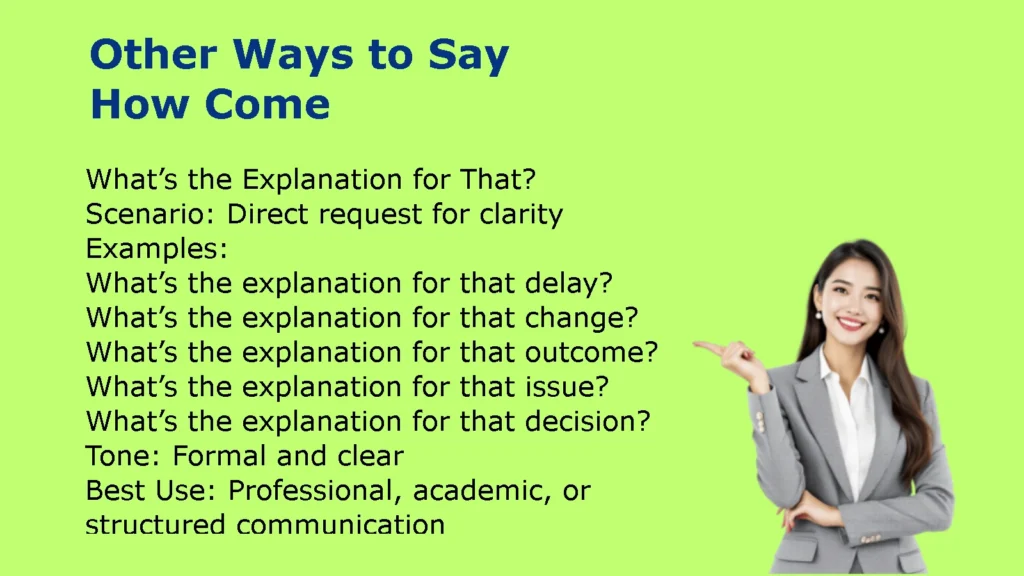
47. What’s the Explanation for That?
Scenario: Direct request for clarity
Examples:
- What’s the explanation for that delay?
- What’s the explanation for that change?
- What’s the explanation for that outcome?
- What’s the explanation for that issue?
- What’s the explanation for that decision?
Tone: Formal and clear
Best Use: Professional, academic, or structured communication
Conclusion
Now you have a complete set of 47 alternative ways to say “How come?” that can help you adapt your tone across different situations. Whether you want to sound casual, polite, professional, or deeply analytical, these variations give you the flexibility to communicate more naturally and effectively in any conversation.

