

Ever wondered why saying “I’m fine” doesn’t always feel fine—especially when you’re actually not? The phrase Other Ways to Say I’m Fine has become more important than ever because people often use it to hide emotions, avoid awkward conversations, or keep things short in casual chats and professional messages.
The problem is, “I’m fine” can sound distant, robotic, or even misleading depending on the situation. You’re not alone if you’ve ever struggled to express your real feelings without oversharing or sounding too intense. And here’s the kicker: the wrong response can sometimes shut down meaningful communication.
But don’t worry—there are better, more natural ways to express yourself.
In this guide, you’ll discover Other Ways to Say I’m Fine, along with polite ways to express emotions, alternative phrases for “I’m okay”, and casual responses for everyday conversations. You’ll also learn how tone changes meaning in both social etiquette and professional communication, so you always say exactly what you mean.
So whether you want to sound more honest, more polite, or just more natural in conversation, this will help you upgrade your everyday expressions. Let’s get into it.
What Does “I’m Fine” Mean?
“I’m fine” usually means that a person is okay physically or emotionally. However, it can also act as a neutral response when someone doesn’t want to share too much. In many cases, it hides deeper feelings like stress, tiredness, or discomfort.
Using alternatives can help you express yourself more clearly and improve communication in personal and professional conversations.
When to Use “I’m Fine”
This phrase is commonly used in casual conversations, workplace chats, and quick replies when someone asks about your wellbeing. However, depending on your tone, it can either sound reassuring or distant.
You can replace it when you want to:
- Sound more honest
- Show emotion or empathy
- Avoid sounding too closed off
- Keep conversations engaging
Is It Professional/Polite to Say “I’m Fine”?
Yes, “I’m fine” is both professional and polite. However, in workplace communication, it may sometimes feel too short or unengaged. Alternatives like “I’m doing well, thank you” or “I’m managing things okay” often sound more polished and clear.
1. I’m Doing Well
Scenario: General positive response
Examples:
- I’m doing well, thanks for asking.
- I’m doing well today, just busy.
- I’m doing well and staying productive.
- I’m doing well overall.
- I’m doing well, how about you?
Tone: Positive and polite
Best Use: Professional and casual conversations
2. I’m Good, Thanks
Scenario: Friendly everyday reply
Examples:
- I’m good, thanks for checking in.
- I’m good, just a little tired.
- I’m good, everything’s fine.
- I’m good, how are you?
- I’m good overall today.
Tone: Casual and warm
Best Use: Friends, texting, informal chats
3. I’m Doing Okay
Scenario: Neutral emotional state
Examples:
- I’m doing okay, just a long day.
- I’m doing okay, nothing special.
- I’m doing okay for now.
- I’m doing okay, thanks for asking.
- I’m doing okay, just managing things.
Tone: Neutral and honest
Best Use: When you don’t feel great but want to stay polite
4. I’m Alright
Scenario: Simple and balanced response
Examples:
- I’m alright, just a bit busy.
- I’m alright, no complaints.
- I’m alright today.
- I’m alright, just tired.
- I’m alright, how about you?
Tone: Neutral and slightly reserved
Best Use: Casual conversations
5. I’m Hanging In There
Scenario: Slightly tough or stressful day
Examples:
- I’m hanging in there, it’s been a long day.
- I’m hanging in there, just staying strong.
- I’m hanging in there, bit overwhelmed.
- I’m hanging in there, things are busy.
- I’m hanging in there, one step at a time.
Tone: Honest and slightly emotional
Best Use: Close friends or supportive conversations
6. I’m Managing
Scenario: Work or stress context
Examples:
- I’m managing, just a lot going on.
- I’m managing things okay.
- I’m managing, staying on track.
- I’m managing work and life.
- I’m managing for now.
Tone: Responsible and composed
Best Use: Professional or mature conversations
7. I’m Alright for Now
Scenario: Temporary state check-in
Examples:
- I’m alright for now, thanks.
- I’m alright for now, just resting.
- I’m alright for now, things could change.
- I’m alright for now, just taking it easy.
- I’m alright for now, nothing major.
Tone: Cautious and reflective
Best Use: Honest but reserved responses
8. I’m Feeling Okay
Scenario: Emotional awareness
Examples:
- I’m feeling okay today.
- I’m feeling okay, just tired.
- I’m feeling okay overall.
- I’m feeling okay, nothing to worry about.
- I’m feeling okay at the moment.
Tone: Calm and balanced
Best Use: Casual emotional check-ins
9. I’m Doing Fine
Scenario: Standard polite reply
Examples:
- I’m doing fine, thanks.
- I’m doing fine today.
- I’m doing fine, just busy.
- I’m doing fine overall.
- I’m doing fine, how are you?
Tone: Neutral and polite
Best Use: Formal or casual settings
10. I’m Getting By
Scenario: Slight struggle but coping
Examples:
- I’m getting by, just a lot happening.
- I’m getting by day to day.
- I’m getting by, staying strong.
- I’m getting by for now.
- I’m getting by with work pressure.
Tone: Honest and slightly emotional
Best Use: Close friends or supportive conversations
11. I’m Okay, Just Tired
Scenario: Physical exhaustion
Examples:
- I’m okay, just really tired.
- I’m okay, just need rest.
- I’m okay, but exhausted.
- I’m okay, long day today.
- I’m okay, just drained.
Tone: Honest and relatable
Best Use: Casual chats with friends/family
12. I’m Not Bad
Scenario: Light and informal reply
Examples:
- I’m not bad, thanks.
- I’m not bad today.
- I’m not bad, just busy.
- I’m not bad at all.
- I’m not bad, how about you?
Tone: Friendly and relaxed
Best Use: Everyday conversations
13. I’m Alright, Thanks for Asking
Scenario: Polite and appreciative response
Examples:
- I’m alright, thanks for asking.
- I’m alright, appreciate it.
- I’m alright, thanks for checking in.
- I’m alright today, thank you.
- I’m alright, really appreciate it.
Tone: Polite and grateful
Best Use: Professional and respectful chats
14. I’m Coping
Scenario: Stress or pressure situation
Examples:
- I’m coping, one day at a time.
- I’m coping with things.
- I’m coping, staying focused.
- I’m coping, doing my best.
- I’m coping for now.
Tone: Honest and slightly serious
Best Use: Supportive conversations
15. I’ve Been Better
Scenario: Subtle emotional difficulty
Examples:
- I’ve been better, honestly.
- I’ve been better, just a tough day.
- I’ve been better, but I’ll manage.
- I’ve been better recently.
- I’ve been better, thanks for asking.
Tone: Honest and slightly vulnerable
Best Use: Close friends or trusted people
16. I’m Doing All Right
Scenario: Calm neutral response
Examples:
- I’m doing all right, just busy.
- I’m doing all right today.
- I’m doing all right, nothing much going on.
- I’m doing all right, thanks.
- I’m doing all right overall.
Tone: Neutral and steady
Best Use: Casual or professional chats
17. I’m Holding Up
Scenario: Slight stress but managing
Examples:
- I’m holding up, just a lot happening.
- I’m holding up for now.
- I’m holding up okay.
- I’m holding up despite everything.
- I’m holding up, thanks for asking.
Tone: Honest and slightly emotional
Best Use: Close friends or supportive chats
18. I’m Getting Through It
Scenario: Challenging situation
Examples:
- I’m getting through it slowly.
- I’m getting through it day by day.
- I’m getting through it, no worries.
- I’m getting through it somehow.
- I’m getting through it, staying positive.
Tone: Resilient and real
Best Use: Emotional or honest conversations
19. I’m Surviving
Scenario: Very tough or exhausting day
Examples:
- I’m surviving, honestly.
- I’m surviving this week.
- I’m surviving, barely.
- I’m surviving, just pushing through.
- I’m surviving, one step at a time.
Tone: Raw and honest
Best Use: Close friends, humor, venting
20. I’m Hanging On
Scenario: Emotional or stressful moment
Examples:
- I’m hanging on, it’s been rough.
- I’m hanging on for now.
- I’m hanging on, staying strong.
- I’m hanging on day by day.
- I’m hanging on, but I’ll be okay.
Tone: Vulnerable but strong
Best Use: Trusted conversations
21. I’m Not Too Bad
Scenario: Light and casual response
Examples:
- I’m not too bad today.
- I’m not too bad, thanks.
- I’m not too bad at all.
- I’m not too bad, just tired.
- I’m not too bad, how about you?
Tone: Friendly and relaxed
Best Use: Everyday chats
22. I’m Doing Decent
Scenario: Balanced, neutral state
Examples:
- I’m doing decent today.
- I’m doing decent, nothing special.
- I’m doing decent overall.
- I’m doing decent, thanks.
- I’m doing decent, just busy.
Tone: Casual and neutral
Best Use: Informal conversations
23. I’m Okay-ish
Scenario: Mixed feelings
Examples:
- I’m okay-ish today.
- I’m okay-ish, a bit tired.
- I’m okay-ish, could be better.
- I’m okay-ish, thanks for asking.
- I’m okay-ish, just managing.
Tone: Honest and informal
Best Use: Friends and casual texting
24. I’m Managing Okay
Scenario: Work or stress context
Examples:
- I’m managing okay, just busy.
- I’m managing okay today.
- I’m managing okay for now.
- I’m managing okay, thanks.
- I’m managing okay overall.
Tone: Controlled and professional
Best Use: Workplace or structured chats
25. I’m Doing Fair
Scenario: Neutral and simple response
Examples:
- I’m doing fair today.
- I’m doing fair, nothing much.
- I’m doing fair overall.
- I’m doing fair, just okay.
- I’m doing fair, thanks.
Tone: Neutral and calm
Best Use: Formal or polite conversations
26. I’m Okay, Just Busy
Scenario: Workload or responsibilities
Examples:
- I’m okay, just busy today.
- I’m okay, work is hectic.
- I’m okay, just tied up.
- I’m okay, lots going on.
- I’m okay, just occupied.
Tone: Practical and honest
Best Use: Work or study contexts
27. I’m Doing My Best
Scenario: Effort-focused response
Examples:
- I’m doing my best right now.
- I’m doing my best, honestly.
- I’m doing my best to manage.
- I’m doing my best today.
- I’m doing my best, thanks for asking.
Tone: Determined and positive
Best Use: Supportive or motivational chats
28. I’m Hanging In
Scenario: Shortened emotional version
Examples:
- I’m hanging in, thanks.
- I’m hanging in today.
- I’m hanging in, just tired.
- I’m hanging in for now.
- I’m hanging in, slowly.
Tone: Casual resilience
Best Use: Friends or informal chats
29. I’m Okay, Just a Bit Off
Scenario: Slight discomfort or mood shift
Examples:
- I’m okay, just a bit off today.
- I’m okay, feeling a little off.
- I’m okay, not my best day.
- I’m okay, just low energy.
- I’m okay, something feels off.
Tone: Honest and reflective
Best Use: Close relationships
30. I’m Doing Fine, Really
Scenario: Reassuring response
Examples:
- I’m doing fine, really.
- I’m doing fine, don’t worry.
- I’m doing fine overall.
- I’m doing fine, honestly.
- I’m doing fine, just tired.
Tone: Reassuring and calm
Best Use: When clarifying you’re okay
31. I’m Okay, Just Overwhelmed
Scenario: Emotional pressure
Examples:
- I’m okay, just overwhelmed right now.
- I’m okay, just a lot to handle.
- I’m okay, things are overwhelming.
- I’m okay, just mentally tired.
- I’m okay, need a break soon.
Tone: Honest and emotional
Best Use: Trusted people
32. I’m Getting There
Scenario: Recovery or improvement
Examples:
- I’m getting there slowly.
- I’m getting there, step by step.
- I’m getting there, thanks.
- I’m getting there, improving.
- I’m getting there day by day.
Tone: Hopeful and positive
Best Use: Encouraging conversations
33. I’m Okay, Just Not Great
Scenario: Mild dissatisfaction
Examples:
- I’m okay, just not great today.
- I’m okay, could be better.
- I’m okay, a bit off today.
- I’m okay, not feeling my best.
- I’m okay, just tired.
Tone: Honest and mild
Best Use: Close friends
34. I’m Fine, Nothing Much
Scenario: Minimal update
Examples:
- I’m fine, nothing much happening.
- I’m fine, just the usual.
- I’m fine, same routine.
- I’m fine, pretty normal day.
- I’m fine, not much going on.
Tone: Neutral and simple
Best Use: Casual conversations
35. I’m Okay, Just Resting
Scenario: Recovery mode
Examples:
- I’m okay, just resting today.
- I’m okay, taking a break.
- I’m okay, just relaxing.
- I’m okay, need rest.
- I’m okay, staying home.
Tone: Calm and restful
Best Use: Health or downtime updates
36. I’m Alright, Just Thinking
Scenario: Reflective mood
Examples:
- I’m alright, just thinking a lot.
- I’m alright, a bit reflective.
- I’m alright, lost in thoughts.
- I’m alright, just processing things.
- I’m alright, thinking things through.
Tone: Thoughtful and quiet
Best Use: Deep conversations
37. I’m Okay, Just Emotionally Drained
Scenario: Emotional exhaustion
Examples:
- I’m okay, just emotionally drained.
- I’m okay, very drained today.
- I’m okay, need some space.
- I’m okay, just exhausted emotionally.
- I’m okay, recovering slowly.
Tone: Honest and vulnerable
Best Use: Trusted friends or partners
38. I’m Okay, Just Low on Energy
Scenario: Physical tiredness or burnout
Examples:
- I’m okay, just low on energy today.
- I’m okay, feeling drained.
- I’m okay, just need rest.
- I’m okay, a bit exhausted.
- I’m okay, running low on energy.
Tone: Honest and tired
Best Use: Friends, family, casual chats
39. I’m Doing Alright, Just a Long Day
Scenario: End-of-day fatigue
Examples:
- I’m doing alright, just a long day.
- I’m doing alright, tired but okay.
- I’m doing alright, been busy all day.
- I’m doing alright, just worn out.
- I’m doing alright, nothing major.
Tone: Casual and realistic
Best Use: Evening conversations
40. I’m Okay, Just Taking It Slow
Scenario: Relaxed pace or recovery
Examples:
- I’m okay, just taking it slow today.
- I’m okay, moving at a slower pace.
- I’m okay, just relaxing things.
- I’m okay, no rush today.
- I’m okay, keeping it easy.
Tone: Calm and relaxed
Best Use: Casual or wellness-focused chats
41. I’m Fine, Just a Bit Stressed
Scenario: Mild stress or pressure
Examples:
- I’m fine, just a bit stressed right now.
- I’m fine, work is stressful.
- I’m fine, just handling pressure.
- I’m fine, a lot on my mind.
- I’m fine, managing stress.
Tone: Honest and slightly tense
Best Use: Close friends or supportive chats
42. I’m Okay, Just Not in the Mood
Scenario: Low social or emotional energy
Examples:
- I’m okay, just not in the mood today.
- I’m okay, feeling a bit off.
- I’m okay, just quiet today.
- I’m okay, not very talkative.
- I’m okay, need some space.
Tone: Reserved and honest
Best Use: Personal or close relationships
43. I’m Doing Fine, Just Focused on Things
Scenario: Busy or task-oriented
Examples:
- I’m doing fine, just focused on work.
- I’m doing fine, lots to handle.
- I’m doing fine, staying focused.
- I’m doing fine, busy with tasks.
- I’m doing fine, keeping myself occupied.
Tone: Professional and composed
Best Use: Workplace or study contexts
44. I’m Okay, Just a Bit Tired Mentally
Scenario: Mental fatigue
Examples:
- I’m okay, just mentally tired today.
- I’m okay, need a mental break.
- I’m okay, brain is overloaded.
- I’m okay, just thinking too much.
- I’m okay, feeling mentally drained.
Tone: Honest and reflective
Best Use: Trusted conversations
45. I’m Fine, Just Dealing With Things
Scenario: Life responsibilities
Examples:
- I’m fine, just dealing with things.
- I’m fine, handling a few issues.
- I’m fine, sorting things out.
- I’m fine, just managing life stuff.
- I’m fine, nothing too serious.
Tone: Mature and composed
Best Use: Professional or adult conversations
46. I’m Okay, Just Going Through It
Scenario: Emotional or personal struggle
Examples:
- I’m okay, just going through it right now.
- I’m okay, tough times but managing.
- I’m okay, working through things.
- I’m okay, just in a rough phase.
- I’m okay, taking it day by day.
Tone: Honest and emotional
Best Use: Close friends or supportive people
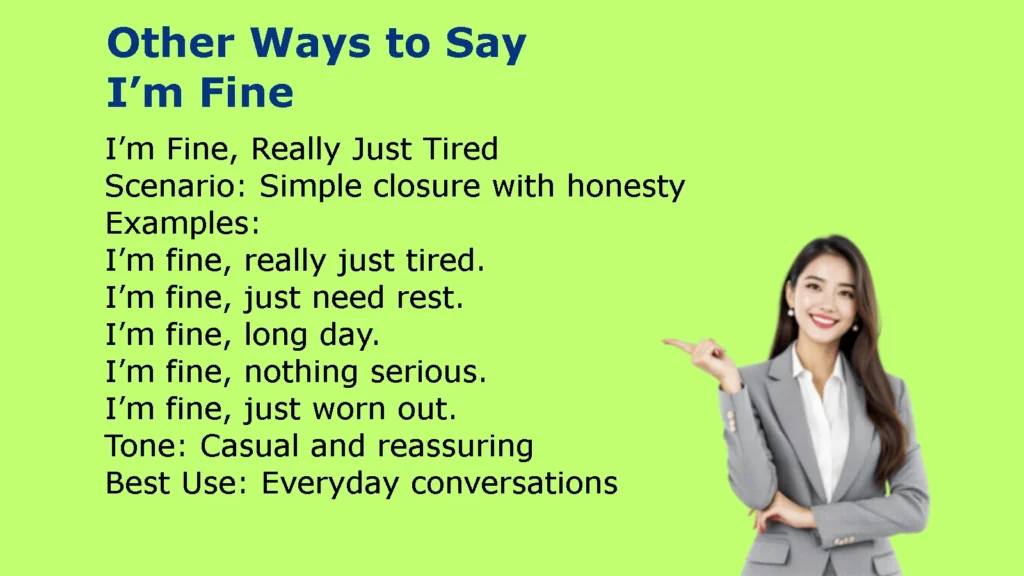
47. I’m Fine, Really Just Tired
Scenario: Simple closure with honesty
Examples:
- I’m fine, really just tired.
- I’m fine, just need rest.
- I’m fine, long day.
- I’m fine, nothing serious.
- I’m fine, just worn out.
Tone: Casual and reassuring
Best Use: Everyday conversations
Conclusion
Instead of repeating “I’m fine,” these 47 expressive alternatives help you communicate your real emotional and physical state more clearly. Whether you’re feeling energetic, stressed, tired, or just neutral, these phrases allow you to sound more natural, human, and connected in any conversation—personal, casual, or professional.

