

Other Ways to Say “Why Do You Ask” is a phrase that comes up in everyday conversations, emails, and even professional discussions—but it can sometimes sound abrupt, overly direct, or repetitive. Have you ever found yourself pausing mid-conversation, unsure how to respond without sounding defensive or too curious in return? You’re not alone.
This guide is here to make that easier. It promises you a set of natural, polite, and context-aware alternatives you can use instead—whether you want to stay neutral, sound friendly, or keep things professionally appropriate. You’ll get options that work across casual chats, interviews, and formal communication.
But here’s the kicker: the way you phrase this simple question can subtly change the tone of the entire interaction. And it gets better…
You’ll also learn when to use each variation so your responses feel smooth, intentional, and socially aware. By the end, you’ll never feel stuck repeating “why do you ask” again—you’ll have flexible, confident alternatives ready for any situation.
What Does “Why Do You Ask?” Mean?
“Why do you ask?” is a question used to understand the reason behind someone’s inquiry. In other words, it helps you clarify their intention before answering. Additionally, it can sometimes signal curiosity, caution, or even mild defensiveness depending on tone and context.
When to Use “Why Do You Ask?”
You can use it when someone asks you a personal, unusual, or unexpected question. Moreover, it is useful when you want to understand their motivation before responding. For example, in casual chats, interviews, or professional discussions, it helps you pause and evaluate intent.
Is It Professional or Polite?
Yes, it can be polite; however, tone matters a lot. In professional settings, softer alternatives often sound more respectful. Therefore, choosing a gentle or neutral variation can improve communication and reduce misunderstanding.
30 Ways to Say “Why Do You Ask?”
1. May I Ask Why You’re Asking?
Scenario: Polite and professional settings
Examples:
- May I ask why you’re asking about my role?
- Can I ask why you’re asking this question?
- May I ask why you need this information?
- I’m curious—may I ask why you’re asking?
- May I ask why this is important to you?
Tone: Respectful and formal
Best Use: Workplace or interviews
2. What Makes You Ask That?
Scenario: Casual conversation
Examples:
- What makes you ask that today?
- What makes you ask about my job?
- I’m curious—what makes you ask that?
- What makes you ask such a question?
- What makes you ask this right now?
Tone: Curious and friendly
Best Use: Friends or informal chats
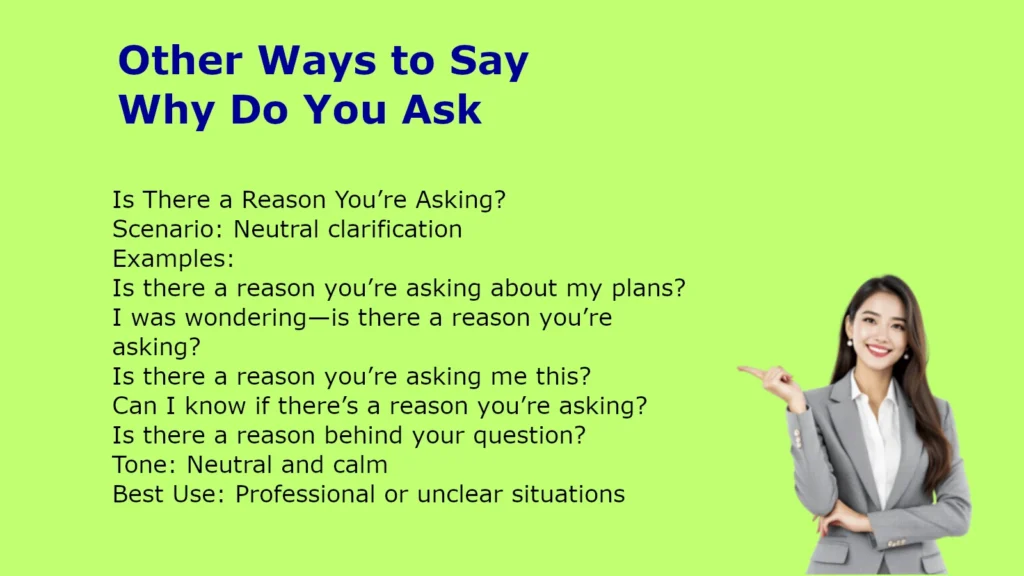
3. Is There a Reason You’re Asking?
Scenario: Neutral clarification
Examples:
- Is there a reason you’re asking about my plans?
- I was wondering—is there a reason you’re asking?
- Is there a reason you’re asking me this?
- Can I know if there’s a reason you’re asking?
- Is there a reason behind your question?
Tone: Neutral and calm
Best Use: Professional or unclear situations
4. What’s Behind Your Question?
Scenario: Slightly investigative tone
Examples:
- What’s behind your question about my schedule?
- I’m curious—what’s behind your question?
- What’s behind this question today?
- What’s behind your interest in this topic?
- Can you tell me what’s behind your question?
Tone: Thoughtful and slightly analytical
Best Use: When intent feels unclear
5. Why Do You Want to Know?
Scenario: Informal curiosity
Examples:
- Why do you want to know about my plans?
- I’m curious—why do you want to know?
- Why do you want to know this specifically?
- Can I ask why you want to know?
- Why do you want to know right now?
Tone: Direct but friendly
Best Use: Everyday conversations
6. What’s Prompting That Question?
Scenario: Professional tone
Examples:
- What’s prompting that question today?
- I’m curious—what’s prompting your question?
- What’s prompting this discussion?
- What’s prompting your curiosity?
- What’s prompting that request?
Tone: Formal and neutral
Best Use: Work or formal discussions
7. Could You Share Why You’re Asking?
Scenario: Polite inquiry
Examples:
- Could you share why you’re asking me this?
- I’d appreciate if you could share why you’re asking
- Could you share the reason for your question?
- May I ask you to share why you’re asking?
- Could you share your reason?
Tone: Respectful and soft
Best Use: Professional or sensitive topics
8. Just Curious—What’s the Context?
Scenario: Friendly clarification
Examples:
- Just curious—what’s the context here?
- What’s the context of your question?
- I’m just curious about the context
- Can you share the context behind this?
- What context should I know?
Tone: Casual and open
Best Use: Informal conversations
9. What Led You to Ask That?
Scenario: Thoughtful response
Examples:
- What led you to ask that question?
- I’m curious—what led you to this?
- What led you to ask me this?
- Can you tell me what led you here?
- What led to this question?
Tone: Reflective and calm
Best Use: Deep or meaningful conversations
10. Is Something Specific You’re Looking For?
Scenario: Clarification in conversation
Examples:
- Is something specific you’re looking for?
- Are you looking for something specific?
- Is there something you need to know?
- Can I help you with something specific?
- What exactly are you looking for?
Tone: Helpful and supportive
Best Use: Customer support or assistance
11. Why Do You Ask Me That?
Scenario: Direct clarification
Examples:
- Why do you ask me that today?
- I’m curious—why do you ask me this?
- Why do you ask me about it?
- Can I know why you ask me that?
- Why do you ask me specifically?
Tone: Direct but neutral
Best Use: Everyday conversations
12. What’s Your Interest in This?
Scenario: Slightly formal curiosity
Examples:
- What’s your interest in this topic?
- I’m curious—what’s your interest here?
- What’s your interest in my situation?
- Can you tell me your interest?
- What’s your interest in asking this?
Tone: Professional curiosity
Best Use: Workplace or formal chats
13. Mind Sharing Your Reason?
Scenario: Polite and soft tone
Examples:
- Mind sharing your reason for asking?
- Would you mind sharing your reason?
- Can you mind sharing why you asked?
- I’d appreciate your reason
- Could you mind sharing?
Tone: Very polite
Best Use: Sensitive or formal contexts
14. What’s the Purpose of Your Question?
Scenario: Formal clarification
Examples:
- What’s the purpose of your question today?
- I’m curious—what’s the purpose behind it?
- What’s the purpose of asking this?
- Can you explain the purpose?
- What purpose does this serve?
Tone: Structured and formal
Best Use: Business or academic settings
15. Just Checking—Why Do You Ask?
Scenario: Casual clarification
Examples:
- Just checking—why do you ask?
- I’m just checking, why do you ask?
- Why do you ask, just checking?
- Just curious, why do you ask?
- Checking in—why do you ask?
Tone: Friendly and light
Best Use: Informal chats
16. What Made You Think of That?
Scenario: Friendly curiosity
Examples:
- What made you think of that question?
- I’m curious—what made you think of this?
- What made you think about me?
- What made you think of that topic?
- What made you bring this up?
Tone: Warm and engaging
Best Use: Friends or casual talks
17. Can You Tell Me More About That?
Scenario: Open-ended response
Examples:
- Can you tell me more about that question?
- I’d like to know more about your thoughts
- Can you tell me more about why you asked?
- Please share more details
- Can you expand on that?
Tone: Engaging and supportive
Best Use: Deep conversations
18. What’s Driving That Question?
Scenario: Analytical tone
Examples:
- What’s driving your question today?
- I’m curious—what’s driving this?
- What’s driving your interest?
- What’s driving that concern?
- What’s driving your curiosity?
Tone: Professional and analytical
Best Use: Workplace or strategic discussions
19. Is There Something You’re Trying to Figure Out?
Scenario: Helpful tone
Examples:
- Is there something you’re trying to figure out?
- Are you trying to understand something?
- Is there something unclear?
- Can I help you figure it out?
- What are you trying to understand?
Tone: Supportive and helpful
Best Use: Assistance or guidance situations
20. Why Does That Matter to You?
Scenario: Reflective conversation
Examples:
- Why does that matter to you today?
- I’m curious—why does that matter?
- Why is that important to you?
- What makes it matter?
- Why is this significant to you?
Tone: Thoughtful and deep
Best Use: Personal or meaningful discussions
21. What’s the Reason for Asking That?
Scenario: Neutral clarification
Examples:
- What’s the reason for asking that today?
- I’m curious—what’s the reason for this question?
- What’s the reason for asking me this?
- Can you share the reason for asking?
- What’s the reason behind your question?
Tone: Neutral and clear
Best Use: Work or general conversations
22. Why Are You Curious About That?
Scenario: Friendly tone
Examples:
- Why are you curious about my plans?
- I’m curious—why are you curious about that?
- Why are you curious about this topic?
- Can I ask why you’re curious?
- Why are you curious right now?
Tone: Casual and slightly playful
Best Use: Friends or informal chats
23. What’s Making You Ask This Now?
Scenario: Timing-focused question
Examples:
- What’s making you ask this now specifically?
- I wonder—what’s making you ask this?
- What’s making you ask today?
- What’s making you bring this up?
- What’s making you ask me right now?
Tone: Curious and natural
Best Use: Everyday conversations
24. Is There Something You Need to Know?
Scenario: Helpful clarification
Examples:
- Is there something you need to know from me?
- Are you looking for specific information?
- Is there something you’re trying to confirm?
- Can I help you with something?
- What do you need to know?
Tone: Supportive and helpful
Best Use: Assistance or guidance situations
25. What’s the Motivation Behind That Question?
Scenario: Formal tone
Examples:
- What’s the motivation behind your question?
- I’m curious—what’s your motivation?
- What motivated you to ask that?
- Can you explain your motivation?
- What’s motivating this question?
Tone: Professional and structured
Best Use: Workplace discussions
26. Why Do You Want That Information?
Scenario: Direct clarification
Examples:
- Why do you want that information?
- I’m curious—why do you want to know?
- Why do you want these details?
- Can I ask why you need it?
- Why do you want this specifically?
Tone: Direct but neutral
Best Use: Formal or unclear contexts
27. What’s Your Thought Process Here?
Scenario: Analytical tone
Examples:
- What’s your thought process behind this question?
- I’m curious about your thinking
- What made you think of this?
- Can you explain your thinking?
- What led you here mentally?
Tone: Reflective and analytical
Best Use: Professional or problem-solving discussions
28. Can You Help Me Understand Why?
Scenario: Polite clarification
Examples:
- Can you help me understand why you’re asking?
- I’d like to understand your reason
- Can you explain why this matters?
- Help me understand your question
- Why is this important to you?
Tone: Respectful and open
Best Use: Sensitive or formal conversations
29. What’s Prompting Your Curiosity?
Scenario: Friendly inquiry
Examples:
- What’s prompting your curiosity today?
- I’m curious—what’s prompting this?
- What’s prompting your interest?
- What prompted you to ask that?
- What’s behind your curiosity?
Tone: Warm and conversational
Best Use: Casual discussions
30. Is This for Something Specific?
Scenario: Clarifying intent
Examples:
- Is this for something specific you’re working on?
- Are you asking for a particular reason?
- Is there a specific purpose here?
- Can you tell me the context?
- What is this related to?
Tone: Practical and neutral
Best Use: Work or task-related conversations
31. Why Does This Come Up?
Scenario: Curious reflection
Examples:
- Why does this come up now?
- I wonder why this is coming up
- Why does this matter to you today?
- What brought this topic up?
- Why are we discussing this?
Tone: Reflective and natural
Best Use: Ongoing conversations
32. What Made You Think to Ask Me?
Scenario: Personal curiosity
Examples:
- What made you think to ask me this?
- I’m curious—what made you ask me?
- What made you bring this up to me?
- Why did you ask me specifically?
- What made you choose me to ask?
Tone: Friendly and engaging
Best Use: Personal conversations
33. What’s the Context Here?
Scenario: Clarifying situation
Examples:
- What’s the context of your question?
- I need a bit more context
- Can you share the background?
- What’s going on here?
- What should I know first?
Tone: Neutral and practical
Best Use: Work or unclear situations
34. Why Bring This Up?
Scenario: Slightly direct
Examples:
- Why bring this up now?
- I’m curious—why bring this up?
- Why did you bring this topic up?
- What made you mention this?
- Why mention this today?
Tone: Direct but not rude
Best Use: Casual conversations
35. What Are You Hoping to Find Out?
Scenario: Helpful tone
Examples:
- What are you hoping to find out from me?
- I’m curious—what are you trying to learn?
- What information do you need?
- What are you looking for?
- What’s your goal here?
Tone: Supportive and guiding
Best Use: Assistance or Q&A situations
36. Is This Something Important to You?
Scenario: Emotional or thoughtful tone
Examples:
- Is this something important to you right now?
- I’m curious—why is this important?
- Does this matter to you personally?
- Why is this significant?
- What makes this important?
Tone: Empathetic and reflective
Best Use: Personal conversations
37. What’s Driving This Question From You?
Scenario: Formal variation
Examples:
- What’s driving this question from you today?
- I’m curious—what’s driving this?
- What’s motivating your question?
- What’s the reason behind this?
- Why are you asking this now?
Tone: Structured and professional
Best Use: Work environments
38. Can You Clarify Your Reason?
Scenario: Polite clarification
Examples:
- Can you clarify your reason for asking?
- I’d appreciate clarification
- Can you explain why you’re asking?
- Could you clarify your intent?
- What exactly do you mean?
Tone: Respectful and formal
Best Use: Professional settings
39. What’s the Story Behind That Question?
Scenario: Conversational tone
Examples:
- What’s the story behind your question?
- I’m curious—what led to this?
- What’s the background here?
- Why did this come up?
- What’s the full story?
Tone: Friendly and engaging
Best Use: Casual storytelling conversations
40. Why Do You Ask That Now?
Scenario: Timing emphasis
Examples:
- Why do you ask that right now?
- I’m curious—why now?
- Why bring this up at this moment?
- What made you ask now?
- Why ask this at this time?
Tone: Neutral and curious
Best Use: General conversations
41. What’s Behind Your Interest in This?
Scenario: Polite inquiry
Examples:
- What’s behind your interest in this topic?
- I’m curious—what’s your interest?
- Why are you interested in this?
- What sparked your interest?
- What made you interested?
Tone: Respectful and thoughtful
Best Use: Professional or academic settings
42. Why Do You Want to Know That?
Scenario: Direct clarification
Examples:
- Why do you want to know that specifically?
- I’m curious—why do you want to know?
- Why is this important for you?
- Can I ask why you want to know?
- Why do you need this information?
Tone: Clear and direct
Best Use: Everyday conversations
43. What Led You to That Thought?
Scenario: Reflective tone
Examples:
- What led you to that thought?
- I’m curious—how did you think of that?
- What made you think this way?
- Where did that idea come from?
- What inspired this question?
Tone: Thoughtful and calm
Best Use: Deep conversations
44. Is There Something Specific You’re After?
Scenario: Supportive tone
Examples:
- Is there something specific you’re after?
- Are you looking for something in particular?
- What are you trying to achieve?
- Can I help you with something specific?
- What exactly do you need?
Tone: Helpful and solution-oriented
Best Use: Support or guidance roles
45. What’s Your Aim With This Question?
Scenario: Formal and structured
Examples:
- What’s your aim with this question?
- I’m curious—what are you aiming for?
- What are you trying to achieve?
- Why are you asking this?
- What’s your objective here?
Tone: Professional and clear
Best Use: Workplace discussions
46. Can I Ask What’s Behind That?
Scenario: Soft and polite tone
Examples:
- Can I ask what’s behind that question?
- I’m curious—what’s behind it?
- Can you share what’s behind this?
- What’s behind your thinking?
- Can you explain what’s behind it?
Tone: Gentle and respectful
Best Use: Sensitive conversations
47. What Should I Understand From This Question?
Scenario: Clarification-focused
Examples:
- What should I understand from this question?
- I’m curious—what does this mean for you?
- What are you implying here?
- Can you help me understand the intent?
- What am I supposed to take from this?
Tone: Thoughtful and clarifying
Best Use: Misunderstanding or unclear intent
Conclusion
In conclusion, instead of repeatedly asking “Why do you ask?”, you now have 47 natural, polite, and professional alternatives to choose from. Furthermore, by adjusting your tone—whether casual, formal, or reflective—you can make your conversations smoother, clearer, and more meaningful. Ultimately, the right phrasing helps you stay curious while also sounding respectful, confident, and socially intelligent.

